NO RETURNS
The tracks on the upcoming Boysonic release are a snapshot of a period
largely absent from the discussion around Romanian electronic dance
music: the fi rst half of the 1990s.
Boysonic’s music was made in the face of considerable adversity, in a
Romania still reeling from the aftermath of the 1989 revolution,
spiralling in fl ation of over 200%, and the violence of the early-1990s
Mineriads. In the gatefold photos, one of the band’s members can be
seen performing live wearing a miner’s safety helmet, a piece of
stagewear, but also a charged symbol of the period.
The original music on Madhouse was made in Bra?ov during 1993–1994.
Situated away from Bucharest’s political and cultural centre, Bra?ov
gave the project its own slightly detached rhythm. Classically trained in
piano and active in local radio, Mihai Barb developed Boysonic as a
largely one-man act, often joined live by a changing cast of dancers and
vocalists. In the absence of a developed club circuit, early performances
took place in pre-1989 concert halls, seaside resorts and local
entertainment circuits organised around regional radio stations.
Agnostic in genre and unusually fl uid in approach, Madhouse moves
through downtempo pop burners, KLF-type UK house, boomy breakbeat,
new beat and acid-leaning experiments. The material re fl ects a short-
lived moment before the Romanian mainstream/underground divide had
fully taken shape, when electronic music lacked infrastructure but not
imagination.
Sampling was used generously, with drum loops, vocal fragments and
preset banks repurposed through software such as ProTracker and
further processed outboard.
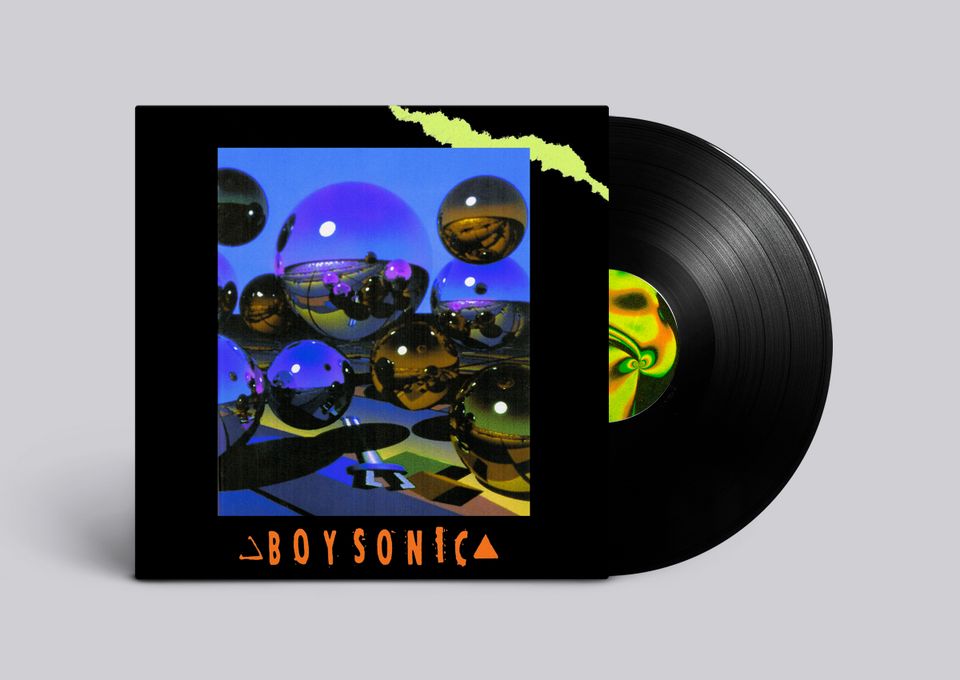
The release comes as a 2xLP gatefold.
Remixes are from Benedikt Frey, Boysonic, Cosmin TRG, Flore of Khidja,
Romanso ff , and Tankwart.

 1 / 3